
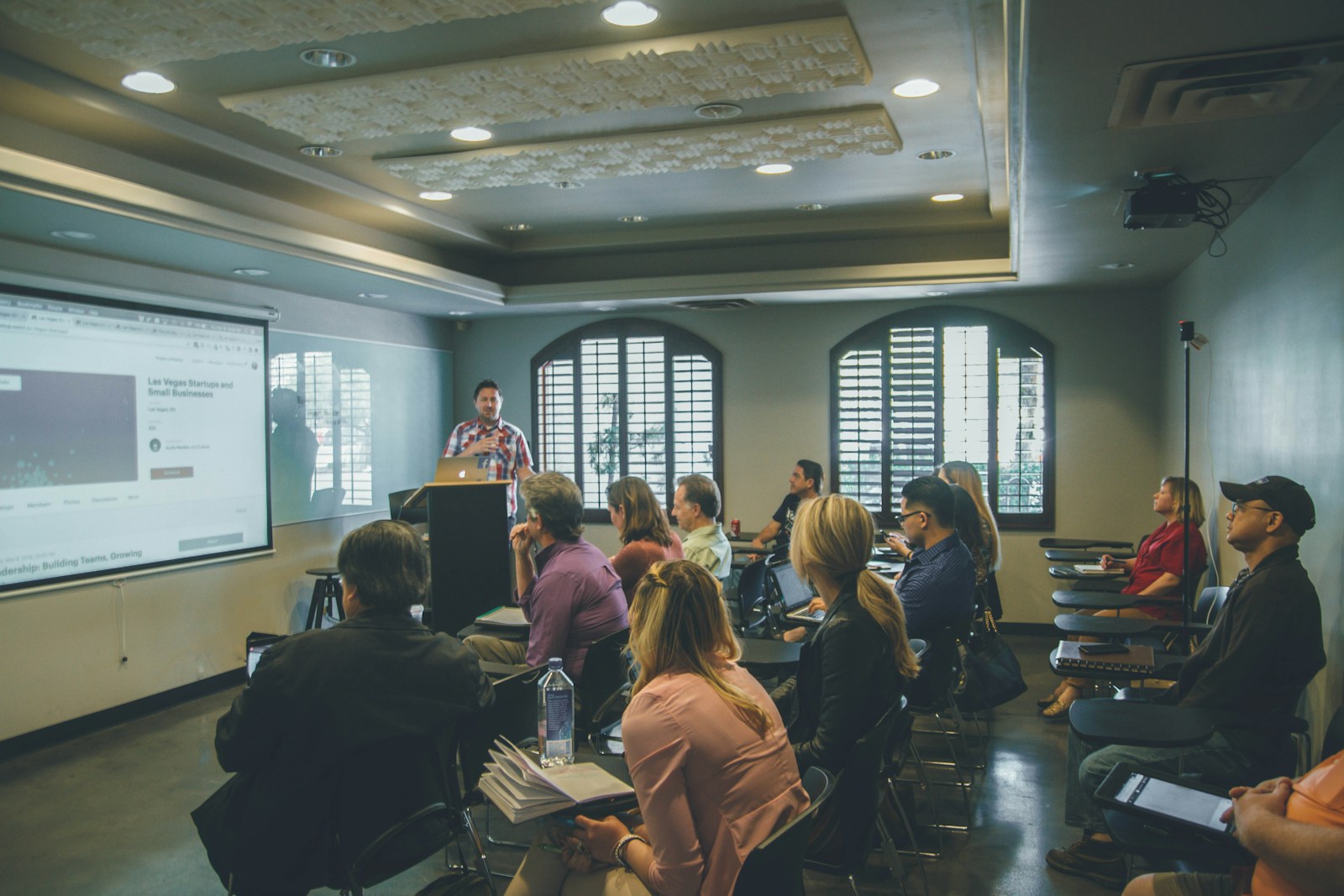
Teaching Tips for Educators
Expert strategies, adult learning theory and practical activities to help childbirth and parenting educators deliver engaging, effective classes
9 Key Principles
From Malcolm Knowles’ adult learning theory
RAMP2FAME
9 memory-boosting techniques for educators
95% Retention
When learners teach others — the most powerful method
Adult Learning Concepts in Under 3 Minutes
Watch these short, powerful videos by Alan Cadell to ground your practice in adult learning theory
Adult Learning Concepts
A quick-fire overview of how adults learn best and what that means for your facilitation style
How to Facilitate Discussion & Collaboration
Practical strategies to get your group talking, sharing and learning from each other
Introduction to Instructional Design
A beginner-friendly walkthrough of an instructional design model you can apply immediately
Personal Philosophy & Group Facilitation
Developed by Kim Brickwood
Your personal philosophy shapes everything you do as an educator. What you believe influences what information you share, how you respond to questions, and how you facilitate group dynamics.
Be mindful that your personal constructs — around topics like vaccination, circumcision, or dietary choices — can unconsciously influence your group facilitation. Great educators foster informed choice, not personal agendas.
Reflective Questions for Educators
💭 Why do I want to be a childbirth and parenting educator?
💭 What are my beliefs about birth, parenting and child development?
💭 How might my beliefs shape what I include or exclude from my classes?
💭 How do I respond when a participant holds a view different from mine?
How Philosophy Impacts Your Group
Educators unconsciously select and filter information based on personal beliefs.
Your facilitation style sets the tone for safety, openness and participant confidence.
Presenting evidence-based information without personal bias empowers informed choices.
Developed by Kim Brickwood
The RAMP2FAME Framework
9 evidence-based principles that transform how adults retain and apply learning in your classes
“I hear and I forget. I see and I remember. I do and I understand.” — Confucius
R
Recency
Information presented at the beginning or end of a session is remembered best. Structure sessions with key takeaways at start and close.
A
Appropriateness
Content must match participants’ needs, experience level and cultural context. Irrelevant content is quickly forgotten.
M
Motivation
Adults learn best when they understand why the information matters to them personally. Connect content to real-life goals.
P
Primacy
First impressions and the first piece of information shared sets the tone. Make your opening count.
2
Two-Way Learning
Learning is most effective when it’s interactive. Encourage questions, discussion and peer sharing throughout.
F
Feedback
Timely, constructive feedback reinforces correct understanding and corrects misconceptions before they become entrenched.
A
Active Learning
Participants who actively engage — through doing, writing, or teaching — retain significantly more than passive listeners.
M
Multisensory Learning
Engaging multiple senses (visual, auditory, kinaesthetic) increases neural pathways and deepens memory retention.
E
Exercise & Over-Learning
Repetition and practice embed knowledge. Revisiting key concepts throughout a program reinforces long-term retention.
Practical Learning Activities
Tried and tested activities to energise your group, deepen learning and build community — developed by Kim Brickwood
Small Group Work
Divide into small groups to tackle a discussion question or problem. Encourages networking, peer support and shared problem-solving that larger groups can’t achieve.
Energisers
Quick movement-based activities to re-energise a group mid-session. Try placing question cards around the room — participants move and discuss as they go.
Graffiti Sheets
Post open-ended statements on butcher’s paper around the room. Participants circulate and add responses — powerful for surfacing diverse perspectives.
Scenarios
Present a short story-based scenario for small groups to problem-solve. Brings theory to life with real-world context like “Miranda and Geoff at 35 weeks.”
Carousel Activity
Set up topic stations around the room. Participants rotate on a timer — standing and seated options ensure inclusivity and keep energy high.
Adult Education Theory
Adults learn differently from children. Understanding these differences transforms how you design and deliver your programs
🧊 The Iceberg Analogy
As a facilitator, you only see 10% of your participant — their visible behaviour in the room. The remaining 90% is hidden beneath the surface.
- Past birth and parenting experiences
- Cultural background and beliefs
- Relationship dynamics and family history
- Previous healthcare experiences (positive or traumatic)
- Personal values and expectations
- Mental health and emotional state
💡 Facilitation tip: Create a safe, non-judgmental space so participants feel comfortable bringing their whole selves to the learning.
🎓 Knowles’ 6 Principles of Adult Learning
1
Self-Directed: Adults are internally motivated. They learn best when they have ownership over their learning journey.
2
Experience-Rich: Adults bring a wealth of life experiences. Connect new knowledge to what participants already know.
3
Goal-Oriented: Adults want to know the purpose of learning. Set clear outcomes at the start of each session.
4
Relevancy-Focused: Adults engage when content is relevant to their lives. Keep examples grounded in real-world scenarios.
5
Practical: Adults want immediately applicable knowledge. Focus on skills they can use right away.
6
Respected: Adults need to feel respected as equals. Facilitate, don’t lecture.
How Much Do We Actually Retain?
Research by Glasser and Dale reveals a striking truth — doing beats listening every time
10%
of what we read
20%
of what we hear
30%
of what we see
50%
of what we see & hear
70%
of what we discuss
80%
of what we experience
95%
of what we teach others
➡️ Design your classes so participants discuss, experience and teach — not just listen.
📚 The Power of Storytelling
Developed by Kim Brickwood
Stories are one of the most powerful tools in an educator’s kit. A well-chosen story can make abstract concepts tangible, emotional and memorable — long after the class has finished.
When you share a birth story, a parenting anecdote or a scenario, you tap into the way human brains are wired to process and retain information. Stories activate multiple areas of the brain simultaneously — including those responsible for emotion, sensory experience and language.
Why Stories Work
- They make content emotionally resonant and personally relevant
- They demonstrate real-world application of concepts
- They build trust and connection between educator and group
- They are recalled far more easily than facts or statistics
- They invite participants to share their own experiences
Storytelling Tips for Educators
📌 Be purposeful: Choose stories that directly illustrate the point you are making. Avoid rambling narratives that lose your audience.
👤 Use real people (with permission): Anonymised real stories carry more weight than fictional scenarios. Ask past participants if they’re willing to share.
⚖️ Balance perspectives: Share stories that reflect diverse experiences — different birth types, parenting styles, cultural backgrounds.
💬 Invite participant stories: Create space for participants to share their own experiences. This builds community and deepens learning for the whole group.
References & Further Reading
Key Works Cited
- Glasser, W. (1998). Choice Theory. HarperCollins.
- Knowles, M.S. (1984). The Adult Learner: A Neglected Species. Gulf Publishing.
- Dale, E. (1969). Audiovisual Methods in Teaching. Dryden Press.
- Brickwood, K. RAMP2FAME Framework. CAPEA Professional Development Resource.
- Brickwood, K. Personal Philosophy & Group Facilitation. CAPEA Resource.
What our members say about CAPEA
Real stories from educators, midwives and professionals across Australia.

“It was a privilege to meet and speak with such a diverse group of professionals. So much to learn! This has opened my eyes to all the possibilities out there for midwifery and childbirth education. I will be continuing to follow the organisation and would love to attend again next year.”
Chloe Passmore
CAPEA Student Member

“I started as an educator after having our second child and really felt that education made a huge difference for me and I wanted to share that knowledge. I realised the benefit of joining CAPEA when I began attending further education opportunities offered by CAPEA and meeting the dedicated educators involved in the organisation.”
Sue Spencer
NSW General Committee Member

“I joined CAPEA to ensure that the quality and delivery of our education programs were kept to the highest of standards and to ensure our educators could provide equity of education for women and families in our local region.”
Jenny Oppedisano
CAPEA Member
Ready to Level Up Your Teaching?
Join Australia’s leading community of childbirth and parenting educators